Art & Culture – Archelle Art
https://archelleart.com
The Best Elegant ArtworkSat, 16 Dec 2023 09:46:01 +0000en-US
hourly
1 https://wordpress.org/?v=6.9https://archelleart.com/wp-content/uploads/2025/06/cropped-Grumps-Place-1-32x32.pngArt & Culture – Archelle Art
https://archelleart.com
3232ARtistry Unleashed: A Journey Through the Evolution of Augmented Reality in Art
https://archelleart.com/artistry-unleashed-a-journey-through-the-evolution-of-augmented-reality-in-art.html
Sat, 16 Dec 2023 09:46:01 +0000https://archelleart.com/artistry-unleashed-a-journey-through-the-evolution-of-augmented-reality-in-art.html
In the realm where art and technology converge, a fascinating evolution has unfolded over the years. Augmented Reality (AR), once confined to the realm of science fiction, has seamlessly woven itself into the tapestry of artistic expression. The journey of implementing AR in art is a captivating tale of innovation, pushing the boundaries of creativity and reshaping the way we engage with artistic narratives.
Genesis: Early Experiments and Exploration (Late 20th Century)
The roots of AR in art can be traced back to the late 20th century, when artists began experimenting with emerging technologies. However, it wasn’t until the advent of the 21st century that AR truly started making its mark. Early pioneers like Jeffrey Shaw and Myron Krueger were among the first to explore the possibilities of interactive and immersive art experiences.
AR as a Tool for Expression (Early 2000s)
As technology advanced, so did the role of AR in art. The early 2000s witnessed artists embracing AR as a medium for self-expression. Mobile devices and portable computing power became more accessible, enabling artists to experiment with the integration of virtual elements into physical spaces. This era saw the birth of artworks that blurred the lines between the real and the virtual, inviting audiences to engage with art in novel ways.
Transformative Art Galleries and Museums (Mid-2000s to Early 2010s)
The mid-2000s marked a significant shift as art galleries and museums recognized the potential of AR to enhance the visitor experience. Institutions began incorporating AR into exhibitions, breathing life into static artworks. Visitors could point their devices at paintings or sculptures, unlocking additional layers of information, animations, or even hidden narratives.
One notable example is the Museum of London’s “Streetmuseum” app, launched in 2010. This app allowed users to explore historical photographs of London overlaid onto their present-day surroundings through AR, creating a bridge between past and present.
Street Art Comes Alive (2010s)
Street artists, known for their ephemeral works, embraced AR as a means of extending the life and impact of their creations. By using AR, street art morphed into dynamic, ever-changing pieces. Passersby equipped with smartphones or AR glasses could witness murals transforming, revealing new layers of meaning, and becoming interactive installations.
A standout project in this era was the collaboration between French artist JR and filmmaker Darren Aronofsky for the creation of the “EYE CONTACT” mural in New York City. Viewers could use an AR app to see the mural animated and hear stories from the individuals depicted.
Collaborations, Accessibility, and Beyond (Present Day)
Today, AR in art has become more collaborative and accessible than ever. Artists collaborate across disciplines, merging technology, design, and storytelling to create immersive installations. AR art experiences are not limited to physical spaces; they extend into virtual realms, allowing global audiences to participate in the narrative.
From AR-powered art installations at major festivals to the democratization of AR tools, the journey continues. Artists are continually pushing the boundaries, exploring the potential of AR to redefine our relationship with art.
In this ongoing narrative, the history of implementing AR in art is not just a chronicle of technological advancements; it is a testament to the unbounded creativity of artists who, armed with digital brushes, continue to paint new worlds and reshape the canvas of artistic expression. The story of AR in art is an ever-unfolding masterpiece, inviting us all to step into the realm of ARtistry.
]]>
Unveiling the Beauty of Sculptures
https://archelleart.com/unveiling-the-beauty-of-sculptures.html
Tue, 22 Aug 2023 01:34:00 +0000https://archelleart.com/?p=5387Sculptures, an art form as ancient as civilization itself, captivates the imagination and stirs the soul. These masterpieces of three-dimensional artistry, often wrought from stone, metal, or wood, have graced our world with their beauty, significance, and ability to convey profound stories and emotions.
The Origins of Sculpture
Sculpture is a testament to humanity’s creativity and craftsmanship. It finds its origins in prehistoric times when our ancestors chiseled crude figurines and reliefs to commemorate their beliefs, experiences, and cultures. Over millennia, this primitive art form evolved into the stunning sculptures that adorn museums, plazas, and galleries today.
Diverse Forms and Materials
Sculptures encompass a staggering variety of forms and materials, each with its unique charm. From the grandeur of marble statues, exemplified by Michelangelo’s “David,” to the delicate intricacy of porcelain figurines, sculpture transcends boundaries.
The Language of Sculpture
Sculptures have a language of their own, a silent dialogue with viewers. They can evoke emotions, tell stories, and reflect cultural ideals. In the graceful curves of a Rodin sculpture or the abstract forms of a Henry Moore piece, one can discern the artist’s intent and vision.
Sculptures in Public Spaces
Public spaces around the world are adorned with sculptures that enrich the urban landscape. Monuments like the Statue of Liberty and the Christ the Redeemer statue in Rio de Janeiro stand as symbols of freedom and faith. Sculptures in public spaces often serve as historical markers, commemorating important events and figures.
Sculptures in Religion and Spirituality
Sculptures hold immense significance in religious and spiritual contexts. They embody deities, saints, and mythological beings, acting as conduits for devotion and meditation. The ancient temples of India, for instance, are replete with intricately carved sculptures that tell stories from Hindu mythology.
Contemporary Sculpture
While traditional sculpture techniques endure, contemporary artists continually push the boundaries of the art form. Sculpture has evolved to incorporate new materials, technologies, and conceptual approaches. Today, you can encounter sculptures made from recycled materials, interactive digital sculptures, and installations that challenge traditional notions of form and space.
Sculpture as Expression
Sculptors use their chosen medium to express a wide range of ideas and emotions. Whether it’s the raw power conveyed by a bronze sculpture of a charging bull, the serenity of a stone Buddha statue, or the playful whimsy of a kinetic sculpture, these works of art invite us to engage with our own thoughts and feelings.
The Art of Preservation
Preserving sculptures is a vital endeavor to ensure that these works of art endure for future generations. Conservationists employ a variety of techniques to protect sculptures from the ravages of time, including cleaning, restoration, and climate-controlled environments.
Sculpture as Legacy
Sculptures are more than mere objects; they are enduring legacies of human creativity. They bridge the gap between past and present, connecting us to the cultures and stories that have shaped our world. When we gaze upon a sculpture, we participate in a timeless dialogue that transcends language and speaks directly to our senses and souls.
In conclusion, the world of sculptures is a testament to the boundless creativity of humanity. These three-dimensional masterpieces, born from the hands and minds of artists throughout history, continue to inspire, challenge, and enrich our lives. Whether ancient or contemporary, traditional or avant-garde, sculptures invite us to explore the depths of human expression and the beauty that resides within the tangible forms of art.
]]>Networking Errors for Artists
https://archelleart.com/networking-errors-for-artists.html
Wed, 10 May 2023 19:44:56 +0000https://archelleart.com/networking-errors-for-artists.html
Putting yourself and your art out into the world doesn’t come easy. One thing that might help is to remember that you’re just meeting people. The stakes are low at this point. My best advice is to encourage you simply to be genuine.
Be. You.
Networking is a two-way street. You must care about nurturing relationships (read: you must care about the people you’re connecting with) in order to be a successful networker.
Having said that, here are the biggest mistakes you can make when networking.
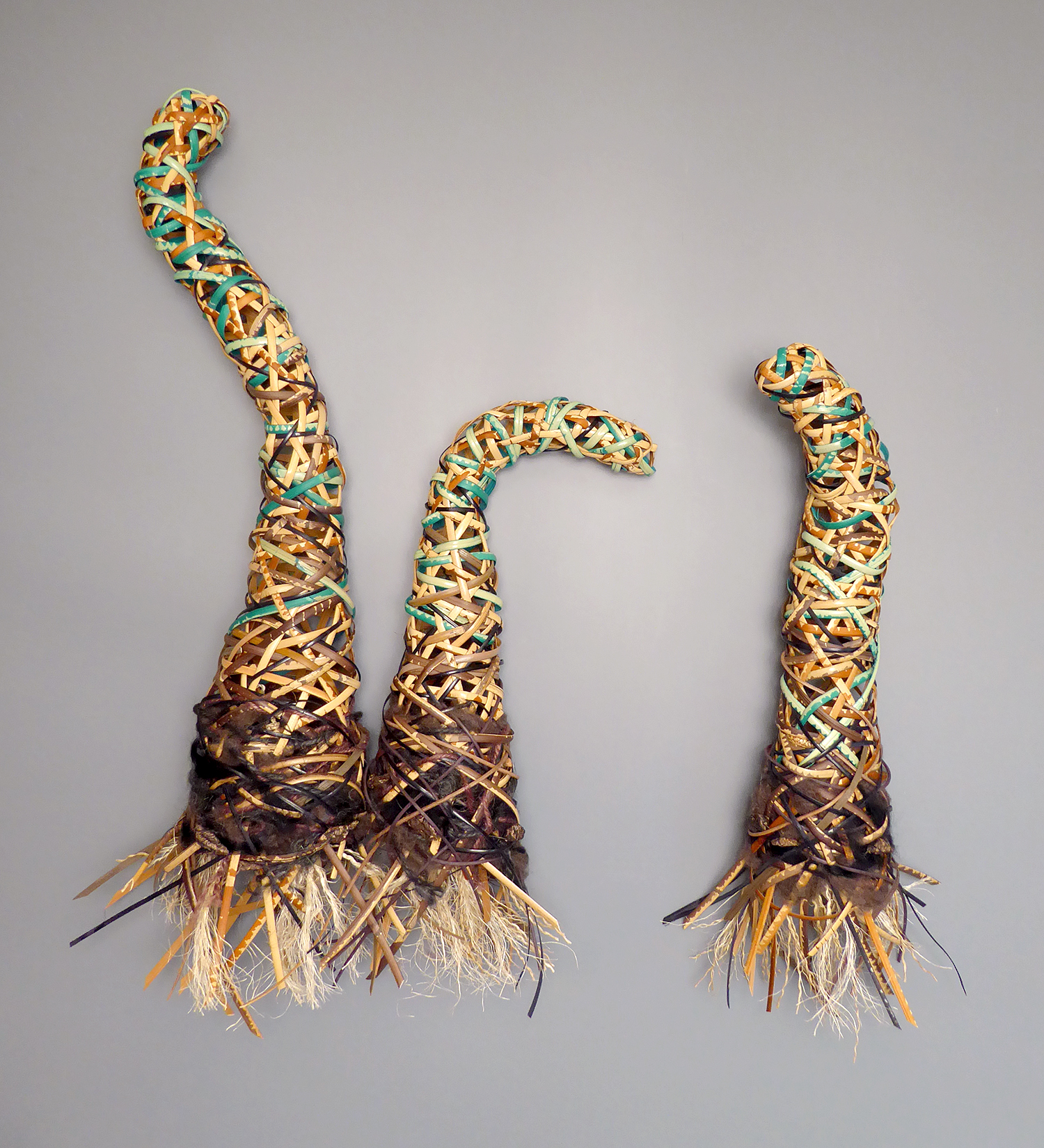
Linda Tapscott, Uprooted. Hex and random weave basket with cane, reed, wire, jute, seagrass, wool roving, dog hair, and thread, 26 x 26 x 5 inches.
Don’t Do These Things
Don’t approach new people in a transactional way. Expecting something in return for what you’re offering feels icky and doesn’t leave any room for a genuine relationship to bloom. Always meet someone first and get to know them before asking for anything.
Don’t hang out only with artists who work in the same genre or medium as you. What fun is that?! You won’t grow until you bust out of your comfort zone.
Don’t shove your business card at people or see how many cards you can unload at a single event. Effective networking is about the quality of relationships, not the quantity. That brings me to …
Don’t forget to get business cards or info from the people you meet. It’s far more important that you get their information than that you give them yours. This puts you in control, which helps you avoid error #7.
Don’t forget people’s names right after you’ve been introduced. There aren’t a lot of excuses here. Saying “I’m bad with names” is a self-fulfilling prophecy and makes you bad with names.
If you genuinely care about the people you’re meeting, you’ll make an effort. Repeat their name immediately. Use a trick from the Car Talk guys and ask how the name is spelled.
Don’t use networking as an opportunity to tell people everything about yourself. Let the relationship unfold naturally. Besides, people love to talk about themselves (thus my caution here) and will like you more if you focus the conversation on their interests.
Don’t sound anxious or needy. These are straight-out energy killers.
Don’t fail to follow up after meeting people. If you follow up with a “nice to meet you” email, phone call, or note card within a couple of days, they are more likely to remember you.
If you wait too long to follow up, your communication might look more like a sales pitch than a considerate message.
First published August 27, 2015. This post has been updated with original comments intact.
Happening now …
The post Networking Errors for Artists appeared first on Art Biz Success.
]]>
Utilizing the Off Season – RedDotBlog
https://archelleart.com/utilizing-the-off-season-reddotblog.html
Wed, 03 May 2023 19:43:45 +0000https://archelleart.com/utilizing-the-off-season-reddotblog.html
I recently received a suggestion for a blog post from the cryptically named “GL”:
I’d love to see a post about strategies you utilize for anticipated “slow” or “off” seasons.
For many of you, the deep winter is the off season. Because my gallery is located in Scottsdale, and because Arizona is so blazing hot during the summer, our art season is exactly the opposite of a lot of other art markets who do most of their business during the summer. Our traffic declines dramatically during the summer, and, as a result, so do our sales.
Our summer slow-down is long too. People often ask me when our “off” season is, and I reply that it begins when the temperatures climb above 105° fahrenheit and ends when the temperature drops back below 105°. This usually corresponds with dates in mid May and mid October. This means that we have five long months without much activity in the gallery.
[In 2019 we opened a second gallery in Pinetop, AZ, which is busy during the summer and slow during the winter. This helps us keep busy year-round, but each of the galleries still has its own off season.]
There are a number of implications of a slow season. First, we really have to make hay while the sun shines during our busy season. We have to make enough sales to cover our overhead and save up a reserve to carry us through the slow summer months.
Second, it means our Scottsdale gallery staff has a lot of time on their hands during the summer. During the season we have a constant flurry of activity. We have days where we will have hundreds of people through the gallery, each one of them requiring attention and follow-up. During the summer we have days where we may only have one or two people through the gallery. The difference in activity can be somewhat shocking.
Many of you also experience slower times in your business as the art market in your local area enters a slower time of year. Allow me to share some of the activities we engage in during the slow times – activities that you might find helpful as you are planning for your slow times.
We follow up with customers. I can’t emphasize enough how important this is. As I mentioned before, during our busy season the volume of traffic can be overwhelming. We do our best to follow up with every customer right after we interact with them, but our off season is a great time to follow up with the ones who didn’t respond, or who told us they weren’t quite ready to buy. I’ve mentioned before that I feel that most artists and gallerists aren’t following up enough with their customers. Off season can be a great time to improve your follow up. Don’t feel awkward if it’s been a while since you last reached out to a customer – dash off an email or pick up the phone. Even though it’s already hot here, June usually ends up being a very good month because of all of the sales we close using follow-up techniques.
We plan for the season. We use the off season to schedule shows, review portfolios, and schedule our gallery display for the upcoming season. As an artist you can use off season time to prepare for shows and art festivals you might be participating in. We use the summer to build up our inventory by having artists ship us work. You can build up your inventory by focusing your off season on production.
We take a vacation. Let’s face it, to be successful in this business, you have to work very, very hard. I take advantage of the off season to spend time with my family and to see the world. This last summer we spent time in the mountains at a cabin, and Carrie and I got away together to Georgia and South Carolina. Xanadu director Elaine went to Europe. I find that down time recharges my batteries and gets me excited to get back to work when the time comes.
We focus on internet sales. Fortunately, the internet has no off season, and over the last several years we’ve seen an ever-increasing growth in our internet sales. During the off season we put even more emphasis on our efforts to generate online activity and sales. Our Catalogue has helped us increase sales activity year-round, including during our off-season.
We tackle big projects. The summer is also a time for us to get to those projects that we keep putting off during the busy season. The abundance of uninterrupted time available during the summer is a great time to update inventory records, organize storage, catch up on bookkeeping, and a host of other unappetizing but necessary tasks.
I think perhaps the greatest challenge of the off season is that it’s very tempting to let momentum slip away. I try to work just as hard during the summer as I do the rest of the year. Those long, slow months can either be a liability or an asset. I work very hard to make them pay off.
What Do You Do To Take Advantage of Your Off Season?
What activities have you found to be most useful during your off season? How do you prepare for your busy season during your slow time? How do you keep your slow time from slowing down your business growth? Share your thoughts and insights in the comments below.
]]>‘How Did You Get Started?’
https://archelleart.com/how-did-you-get-started.html
Wed, 19 Apr 2023 19:41:26 +0000https://archelleart.com/how-did-you-get-started.html
Arthur Denison helps a young Giganotosaurus with a stuck foot,
oil illustration from Dinotopia: The World Beneath.
An editor of Ranger Rick Magazine asked: “Were you crazy about dinosaurs as a kid and did you read every book in the library? Or how did you get interested in this realm?
Me: When I was about six, I saw dinosaur skeletons in a museum, but no one really explained to me that dinosaurs were real animals. I somehow thought that dinosaurs were skeletons. When I learned that people dug these bones out of the ground, I went out in my front yard and started digging with my Tonka trucks. No one could convince me that I wouldn’t find them. I was also interested in archaeology, based on my perusal of old copies of National Geographic that occupied a shelf outside my bedroom door.
Ranger Rick: Did you take lots of art classes as a kid? And then did you go to art school or what’s your educational background in the art field?
Me: I had a couple of encouraging art teachers, but most of what I learned was on my own. I set up a copy stand in my bedroom and made animated films in high school. I sketched the family dog and my parents, especially when they were asleep in front of the TV. In college I majored in archaeology, not art. After graduating college, I did go to art school for a short time. I quickly learned that they weren’t teaching what I wanted to learn: things like caricature, animal anatomy, architectural drawing, and storytelling illustration. My heroes were artists who died before I was born, so I searched for copies of old art instruction books from before 1920 or so, and that’s where I developed my way of making pictures.
]]>If it’s Easy, Should it Cost Less?
https://archelleart.com/if-its-easy-should-it-cost-less.html
Wed, 12 Apr 2023 19:40:37 +0000https://archelleart.com/if-its-easy-should-it-cost-less.html
Here is a concept I struggle with all the time. I bet many of you do too.
The value of our art has very little direct correlation to the amount of time spent creating it.
Stop and read that again please. Do you believe it? Intellectually I do. But my heart says it’s not right. In a just world, the art I spend more time creating should absolutely be worth more than the art that takes me little effort.
I didn’t write this article to discuss pricing strategies. This is more about resisting the urge to assign lower values to less labor intensive works. I’ve continued to do so, and it has not served me well. It’s something I am going to be more vigilant about.
Consider this. I can paint WAY faster now than I could in 1980. Yet my art sells for much more.
If you create things in series like I do, it takes much longer to give birth to the first pieces in the series. As you experiment and learn more efficient ways to breathe life into your ideas, you find you can accomplish them quicker. So does that mean the later pieces are worth less? For me, they are usually noticeably better than the first ones, but they took half the time.
These things make your mind spin when you think too hard on them.
Even when aware of this, the majority of artists I know, myself included, prioritize time spent in our pricing rubric. After all, time is a currency – in the end some would say our MOST valuable resource.
“Nothing worthwhile ever comes easy” often translates in my head to “If it didn’t take a long time to manifest, it’s not really worth much.” Can you relate to this?
But how well is this working for us?
And, with AI tools entering the art scene, some may feel that AI generated or assisted art reduces the time the artist has to spend creating, making the outcome less valuable. Some of us remember that we had the same discussions when we stopped using 35mm slides as references and entered the world of digital photography.
It’s so hard to talk about how collectors value the time it takes for us to make art, because often they do not. Many famous artworks took the artist very little time to produce. Yet they have sold for tens of thousands and even millions. Do a google search on “sale of blank canvas makes history” and you’ll see this happens all the time. How can we reconcile this?
We can’t.
We can’t control perceived value of our artwork. The value of an artwork is subjective and dependent on the tastes and preferences of individual collectors. Some may place a high value on works that are technically impressive and demonstrate a high level of skill and craftsmanship, while others may be more interested in works that are experimental, innovative, or provocative, regardless of the time spent creating them.
So, as all things do for artists, it circles back to what do we, the creators, assign value to? Do we price an amazing painting we made in two hours lower than a piece we have struggled for days with and it still isn’t coming together right? Or do we charge by the square inch? Or do we have a formula based on the cost of our shipping and framing and supplies? These are all viable options. In reality, our art is worth what someone will pay for it, no matter how many hours we put into it.
I’ve come to a place where I price my works of similar size comparable to the last piece I sold. Every few years, I raise those price points by 10 percent. I compare my prices to peers who I feel are at the same place in their art journey as I am, just to be sure I am not pricing too high or too low.
If you have not sold work, or are trying a new category, I find it’s best to compare your art to the prices of sold pieces by your peers. Sometimes we are too close to our own work to be objective. I will often ask friends or gallery owners what they think my work is worth, before I decide to set a price.
Whatever you decide to do, please think before you discount that artwork that feels like it created itself. I’ve heard from many artists that pieces we put the least effort into are the ones that often sell first, and at full price.
It’s something to think about.
Until next time,
]]>2000 separate sculptures woven together with air
https://archelleart.com/2000-separate-sculptures-woven-together-with-air.html
Wed, 05 Apr 2023 19:39:02 +0000https://archelleart.com/2000-separate-sculptures-woven-together-with-air.html
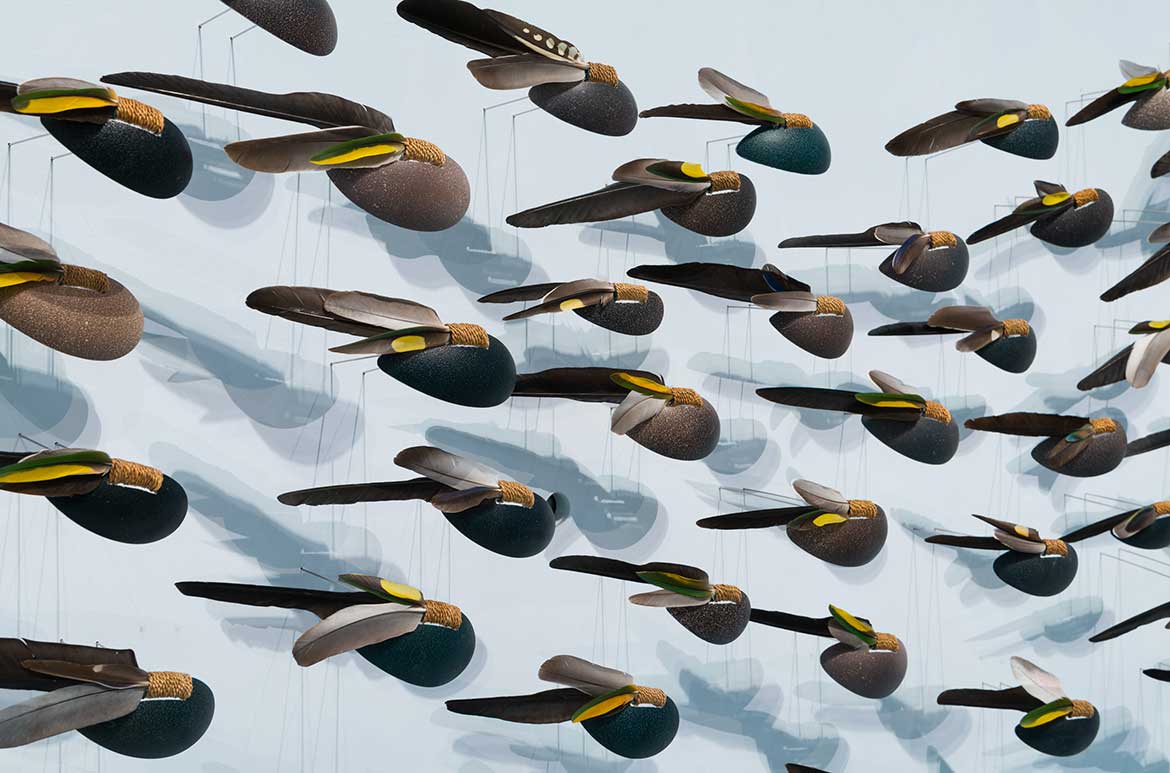
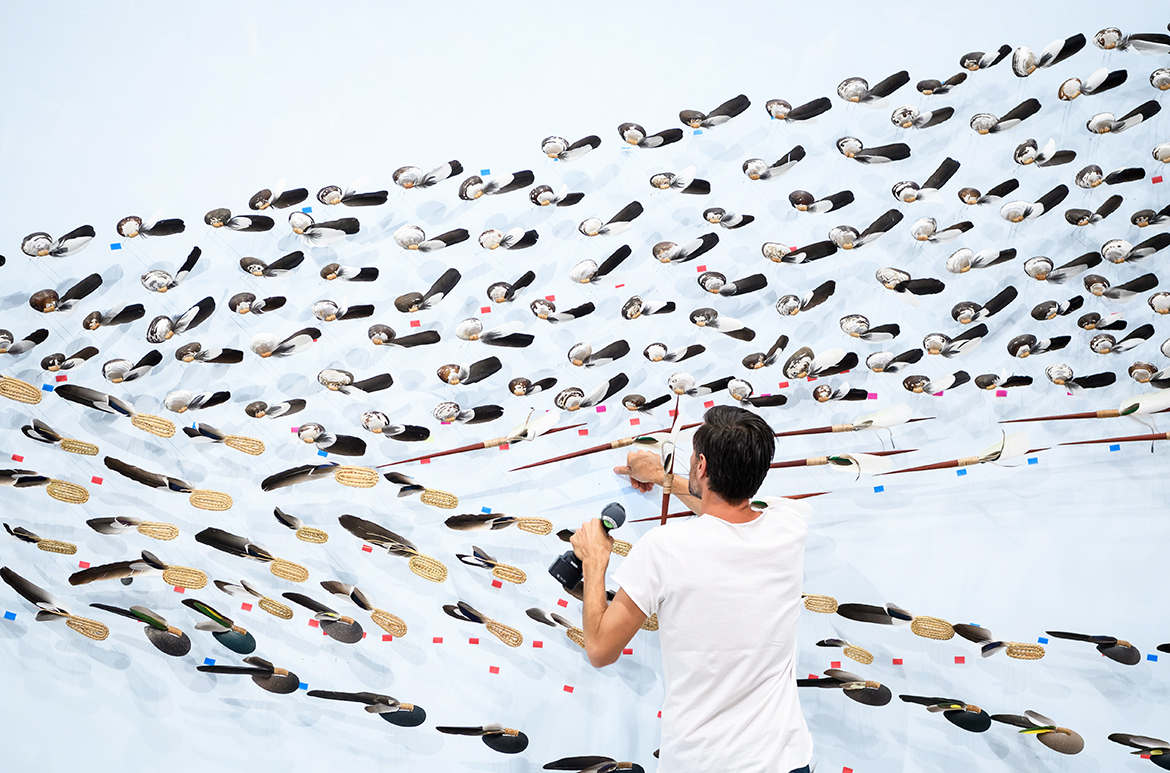
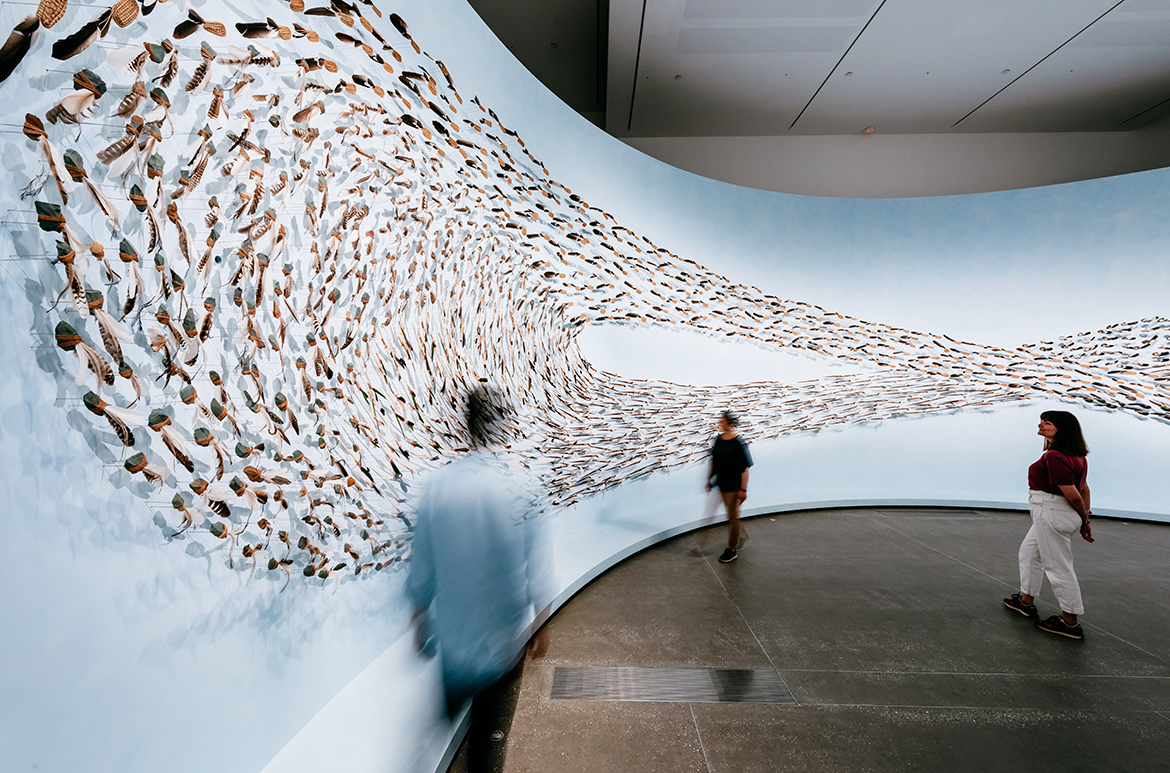
‘Murun’, a Wiradjuri word meaning breath or life, and the English word ‘murmur’, meaning a low recurring sound or soft voices, are terms born far from each other — one long of this land, and one newly spoken here — but converge in untitled (giran) 2018. This major installation by artist Jonathan Jones is the most recent in a series of collaborations with esteemed Elder and Wiradjuri language expert Dr Uncle Stan Grant Snr AM and takes shape as a murmuration of winged sculptures evoking birds in collective flight. View this spectacular installation at the Gallery of Modern Art (GOMA) in Brisbane during the exhibition ‘Air’.
Giran (wind) is a term that describes fear, or apprehension, and the work is accompanied by sounds of wind, bird calls and the breathing and whispering of Wiradjuri speakers. ‘Understanding wind is an important part of understanding Country’, says Jones. ‘Winds bring change, knowledge and new ideas to those prepared to listen.’1 In his work, language is woven together with air over the land; the breath in and out of the body; wings in flight; and the wind through the river oaks, reeds and cumbungi (bulrush).
Details of ‘untitled (giran)’
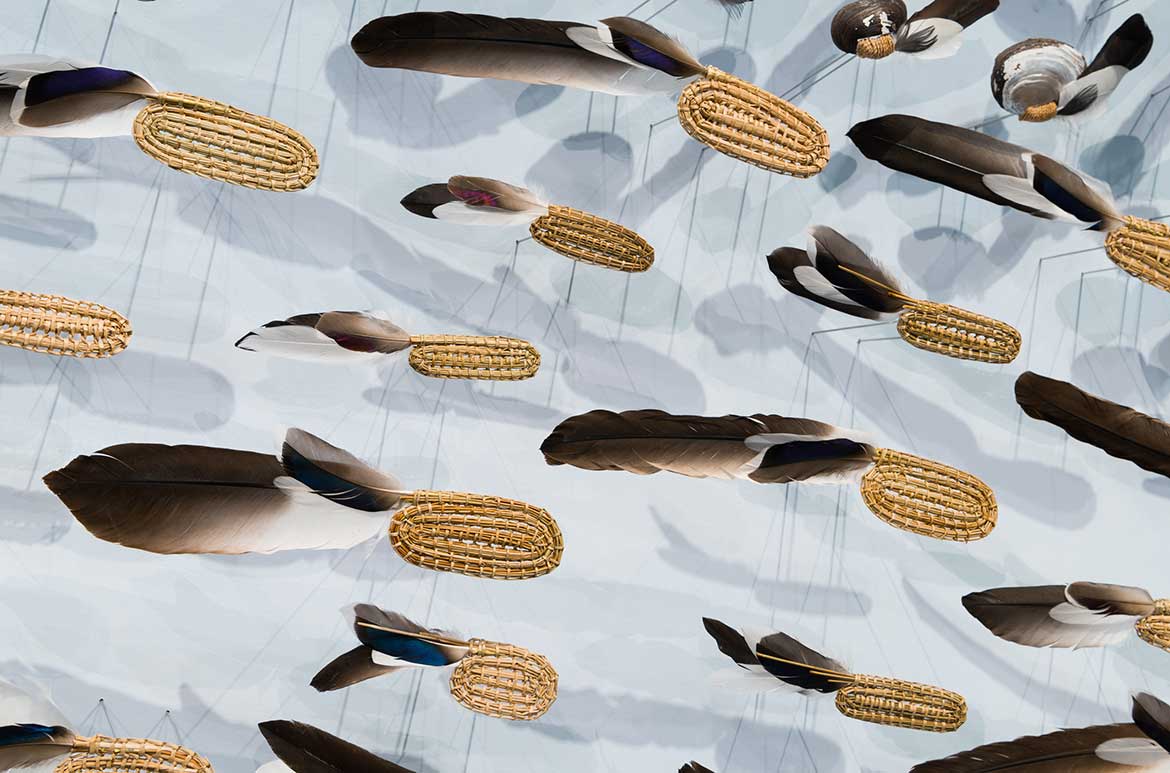
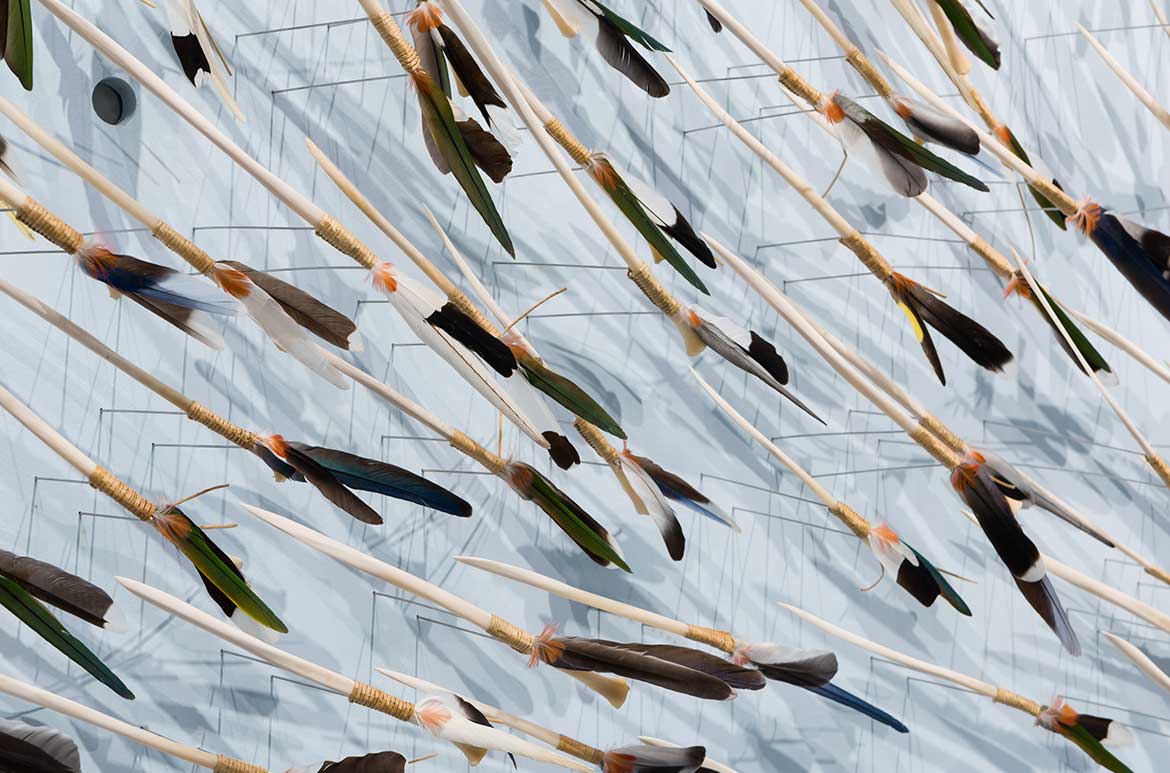
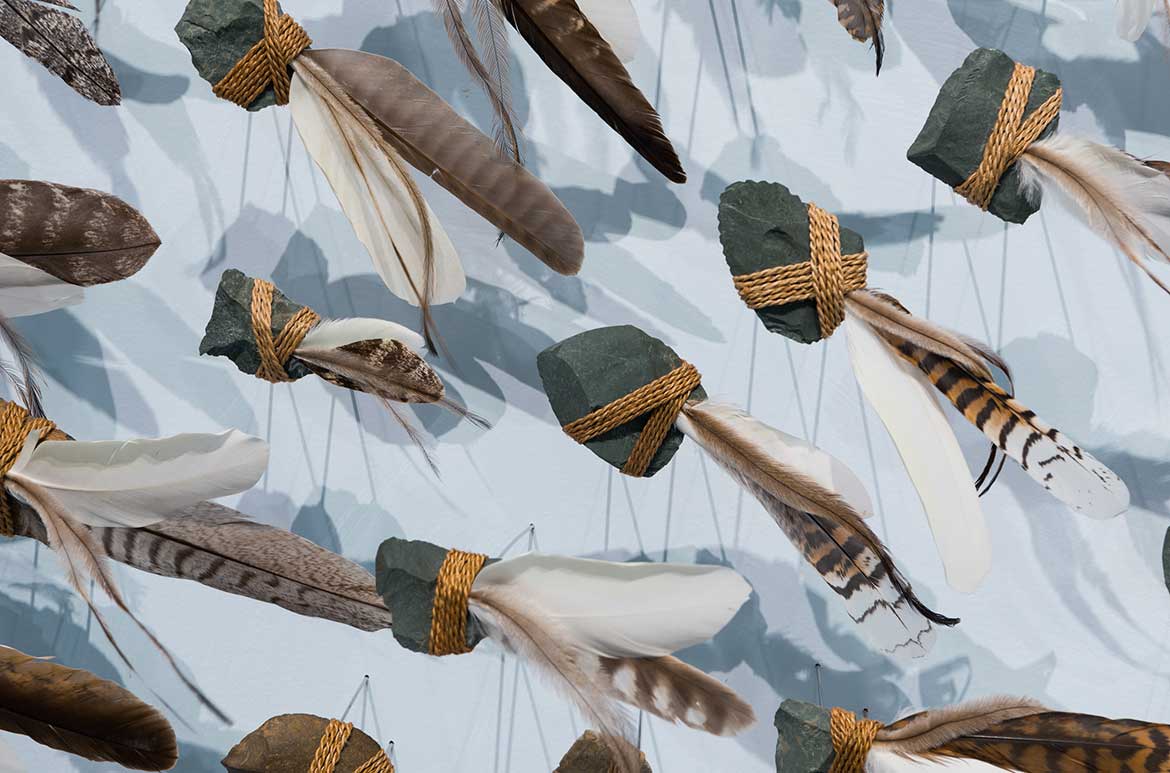
untitled (giran) includes approximately 2000 separate sculptures of six types of tool, each made from a different material: bagay (an emu eggshell spoon); galigal (a stone knife); bingal (an animal bone awl); bindu-gaany (a freshwater mussel scraper); dhala-ny (a hardwood spear point); and waybarra (a rush ‘start’, the beginning of a woven item, such as a basket). Such tools allowed our ancestors to hunt, prepare food, eat, sustain and protect themselves, living lightly and flexibly. Each tool embodies the knowledge passed down through generations and represents the potential for change. ‘Each idea, each tool, is limitless in its potential’, says Jones.
Watch: Jonathan Jones introduces ‘untitled (giran)’
Jonathan Jones discusses untitled (giran) when first installed in ‘The 9th Asia Pacific Triennial of Contemporary Art’ (APT9) in 2018
A small bundle of feathers, gathered from birds from a wide range of locations, is bound to each tool with handmade string. People from all over Australia sent Jones packages of feathers to include in the work, many with handwritten notes.2 To guide their participation, Jones asked his feather-collecting collaborators to ‘Slow down, look around, listen to the birds’, and offered a quote from the late Wiradjuri/Kamilaroi artist Michael Riley: ‘I see the feather, myself, as sort of a messenger, sending messages onto people and community and places’.3
untitled (giran) shares traditional knowledge and seeks to foster change and the exchange of ideas and skills. Uncle Stan Grant Snr speaks of this work as continuing the development of Wiradjuri gulbanha (philosophy), working with language and Country via the artwork for the ongoing enrichment of the community.
Endnotes 1 Quotes from Jonathan Jones are from a conversation with the author, 28 May 2018. 2 Many sent feathers in response to a call out from Kaldor Public Art Projects, which hosted Jones’s previous major work, barrangal dyara (skin and bones) 2016, a vast sculptural installation stretching across 20 000 square metres of Sydney’s Royal Botanic Garden. 3 Michael Riley, <michaelriley.com.au/cloud-2000>, viewed July 2018
Edited extract from the accompanying exhibition publication Air available at the QAGOMA Store and online.
Artwork acknowledgments
The artist acknowledges Aunty Betty Grant and Dr Uncle Stan Grant Snr AM; the Bathurst Wiradyuri and Aboriginal Community Elders Group, including Uncle Bill Allen Jnr Dinawan Dyirribang and Uncle Brian Grant Maliyan; the late Aunty June Barker and Uncle Roy Barker; the late Uncle Albert Mullett; Uncle Geoff Anderson; Uncle Charles ‘Chicka’ Madden; Aunty Yvonne Koolmatrie; Aunty Joy Murphy Wandin; Aunty Julie Freeman; Uncle Badger Bates; Aunty Lorraine Connelly-Northey; Uncle Allan Murray; and Aunty Maroochy Barambah.
Thank you to Lille Madden; Lachlan McDaniel; Luke Mynott, Wes Chew, Julian Wessels & Candace Wise of Sonar Sound; the Hands On Weavers from Wagga Wagga, in particular Aunty Lorraine Tye and Aunty Joyce Hampton; John Kaldor AO and the Kaldor Public Art Projects team, in particular Monique Watkins; and Genevieve O’Callaghan. Thank you to the Jumbunna Institute for Indigenous Education and Research, University of Technology Sydney, and Professor Larissa Behrendt, Matthew Walsh and Cassie Willis.
Thank you to Carol Cooper; Leanne & Darryl Cowie; Nici Cumpston; Judy & Tony Gyss; Sonya Holowell; Liam Keenan; Sara Khan; Chris Koolmatrie; Isaac Lindsay; Enoch Mailangi; Emily McDaniel; Neil Meyrick; Georgia Mokak; Kent Morris & Tiffany Kommedal; Bernice Mumbulla; Simon Penrose; Thea Perkins; Rachel Piercy; Gabriella Roy; Taree Sansbury; Elin Thomas; James Tylor; and Kassidy Waters.
For answering the callout for feathers, thank you to Jan Allen; Deborah Anderson; Kay Andonopoulos; K. Atkens; Lara Bamundo & Annie Dennis Children’s Centre; Timo Barabas; Jacqui Bennett; Vanessa Berry; Kathryn Bird & Ross Gibson; Madeleine Bromley; Heather Bullard; Barbara Campbell; Seth Carr; J Christian; Natalie Cleary; Vikki Clingan; Alison Clouston; Catherine Clover; Nicky Court & Middle Harbour Public School & Northern Nursery School; Alexandra Cowie; K & A Crawford; James Culkin; Leissa & Peter Dane; Heather Davidson; Dallin Day, Sienna Griffiths, Anne O’Neill, Jamiee Woodbridge & Belconnen High School; Fiorella & Phillip de Boos-Smith; Max Delany; Sandra Dodds; Adrienne Doig; Katie Edgerley & Terry Conway; S. Edwards; Linda Elliott; Aaron Ellis, Grace Ellis & Isaac Ellis; L Ellmoos; Mark England; Arlette Exton; Tobhiyah Feller; Megan Fizell; Ellen Forsyth; Toni Grant; Simon Grimes; Sarah Gurich; Haas; Terhi Hakola; Gill Hazleton; Jan & Wal Heinrich; Kate, Stella & Violet Hofman; Maree Hunt; Gordon Jamieson; Jarjum Preschool Group, Gumnut Gardens; Wendy Jones; Joan Kennedy; Roland King; Susie Lachal; Grace Lancken; Martin Awa Clarke Langdon; Anne Lazberger; Michelle Maartensz; Karen Maber; Fiona MacDonald; Vanessa Macris & Harmonie Henderson-Brown; Leigh MacRitchie; Myra Maloney; Bridie Marks; Gillian Marsden & Axel Meiss; Stella Maynard; Alice & Mike McAuley; Tim Melville; Helen Milgate; Romlie Mokak; Victoria Monk; Maryrose Morgan; Laura Murray Cree; Kylie Neagle; Sarina Noordhuis, Saskia Hirschausen & Nikolaas Hirschausen; Linda Notley; Louis O’Connor; Poppy O’Connor; Kerry Ann O’Reilly; Sharron Okines; Kate Isobel Partner; Amanda Peacock; April Phillips; Cara Pinchbeck, Amirah Sergas & Callyn Sergas; Sarah Pinferi, Peter Whatmough, Oscar Whatmough & Sofia Whatmough; Mary Preece; Hannah Presley; Raushan Reehal; Kate Riley; Cameron Robbins; J Robinson; Kelly Robson & Jane Maxfield; Elise Routledge; Stephanie Scroope & Sierra Jurd; Carmen Seaby, Maya Cashworth-Seaby & Athena Cashworth-Seaby; Wesley Shaw; Wilfred Shawcross & Tove Shawcross; Eileen Slarke; Paula, Adrienne & Nadia Slattery; Hannah Snow; Madeleine K. Snow; Carolyn Sullivan; Jennifer Sutton; Nicki Taws; Tim Throsby; K Tok; Emily Valentine; Ilaria Vanni; Robyn Walden; Shae Leslie Watkins; Eleanor Whitworth & Arlen Briggs; Dot Wilkin; Natasha Wills; Suzette Worden; and Susan Wyndham.
This project was assisted by the Australian Government through the Australia Council, its arts funding and advisory body; the NSW Government through Create NSW; the Copyright Agency Cultural Fund; and by Carriageworks through the Solid Ground program.
‘Air’ / Gallery of Modern Art, Gallery 1.1 (The Fairfax Gallery), Gallery 1.2 & Gallery 1.3 (Eric and Marion Taylor Gallery) / 26 November 2022 to 23 April 2023
#QAGOMA #AirGOMA
]]>Want to watch the Portrait Artist of the Year 2023 being filmed?
https://archelleart.com/want-to-watch-the-portrait-artist-of-the-year-2023-being-filmed.html
Wed, 29 Mar 2023 19:37:58 +0000https://archelleart.com/want-to-watch-the-portrait-artist-of-the-year-2023-being-filmed.htmlAs for every usual the Heats of Portrait Artist of the Calendar year are becoming filmed at the Battersea Arts Centre in April 2023. The Sequence 10 episodes will then be broadcast in the Autumn.
What it genuinely seems to be like on “the established” when filming is taking spot
This is what “the studio established-up” appears to be like like alternatively a great deal of the time. Judges chatting to artist and cameraman, audio individual and assorted others standing and sitting close to. Other artists attempting to concentrate and complete their portray. Location the sitter!
Even so the way it really is heading to function will be Distinct this calendar year. See down below for extra data which consists of:
Location: Battersea Arts Centre – and how to get there
Dates: PAOTY Heats Series 10 x 6
Be in the Audience: how to ebook to be there when the filming requires place
An empty Grand Hall, Battersea Arts centre – right before the established-up and folks get there
Portrait Artist of the 12 months: Sequence 10 – Filming of the Heats
Location: Battersea Arts Centre
Battersea Arts Centre – on Lavender Hill
The handle for Battersea Arts Centre is Lavender Hill London SW11 5TN. I know! No clue as to where by.
However
Invite to go to
The web page for Sky Arts Portrait Artist of the 12 months has provision for men and women to indicator up for notifications about the collection – which include when and exactly where filming will take place.
That’s the ideal way of maintaining in contact with what is actually happening – and there are can be final moment modifications on situation.
The Public are invited to go to – particularly people who are enthusiasts and/or have beforehand entered but not acquired in.
This yr, Stuart Prebble (who runs Storyvault Films who make the sequence) has mentioned that
We are welcoming back an audience to observe art in motion at the Battersea Arts Centre. Areas will be constrained so entry shall be on a 1st come very first served foundation for every single date. This features our relatives welcoming working day on the 18th of April. NB: You should be conscious that “first arrive 1st served” does imply that you could arrive but not be admitted owing to overcrowding.
Just after responses from individuals in the Fb Admirer Team who said that they would not want to vacation lengthy length and then locate they couldn’t get in and/or cannot afford to pay for a hotel to be positive of getting there early in the morning, the preparations have been transformed relative to earlier yrs.
We have revised our arrangements for admitting the general public to the recordings of Portraits. We have decided to supply 2 periods a working day for customers of the general public to occur along to enjoy the filming of PAOTY Collection 10 at Battersea Arts Centre.
We will be welcoming audience on to the set both in the early morning (arrival of 8:45am) and the afternoon (arrival of 1:10pm). Be sure to can you register which session you would like to attend by email to portrait@artistoftheyear.co.uk
Please notice, if you would like to show up at the overall working day, use for equally the early morning and afternoon classes and we will check out our greatest to accommodate your ask for.
Dates of the Heats
This calendar year the dates for the filming at Battersea Arts Centre are detailed down below.
By the way, the buy of the Heats – as filmed – is NOT the order of the heats as revealed in the episodes.
There are 8 heats – which usually means one particular of them will be for Celebrity PAOTY – but they will not say which one!
Week 1
Tuesday 18th April (loved ones helpful) AM or PM Household friendly suggests little small children are welcome. Which I get to imply, by implication, not so significantly on other dates! You should not forget about it truly is a movie established so wailing infants or really noisy youngsters may perhaps nicely will need to be eliminated from the Hall for the reason that of the sound.
Wednesday 19th April AM or PM
Thursday 20th April AM or PM
Friday 21st April AM or PM
7 days 2
Monday 24th April AM or PM
Tuesday 25th April AM or PM
Wednesday 26th April AM or PM
Thursday 27th April AM or PM
Week 3
The semi Ultimate is appealing – but more complicated to see what is taking place because they’re all searching at just one sitter – and they are at a reasonable aged distance! Plus cameras require space to get in front of / at the facet of and guiding every single artist!
The problem is to attempt and get the job done out which three will go by to the Ultimate – centered on the warmth portraits at the again of the hall and the portraits of the movie star sitter currently being produced in entrance of you. I picked all 3 correctly when I attended this semi-final!
Appear at the length among easels and sitter
Wednesday 3rd Could (semi last) AM or PM
Examining the semi ultimate portraits of Elaine Webpage in April 2019 for PAOTY 2020
7 days 4
The Final has usually been filmed at the Nationwide Portrait Gallery – but it would not reopen for one more two months so the Closing is at Battersea.
Thursday 18th May well (remaining) AM or PM
There are facilities on website for getting refreshments – but there can be prolonged queues so you might believe it superior to provide your possess.
It really is also a Quite prolonged working day. It starts off early and finishes late. You require to variable that in if being for the afternoon session
]]>10 Secrets of the Best Artist Websites
https://archelleart.com/10-secrets-of-the-best-artist-websites.html
Wed, 22 Mar 2023 19:35:02 +0000https://archelleart.com/10-secrets-of-the-best-artist-websites.html
The best artist websites feel effortless. They put art front and center and give voice to the artist. The sales rep who never sleeps, a great artist website sells your art, communicates with your customers, promotes your exhibits and showcases your best work.
Every month, 500,000 people search for art online. Even if you make your money at art fairs or from a gallery or home studio, you need a way to share and sell your art online.
A stunning portfolio website could jumpstart your art career.
But you’re not a web developer, and frankly who has the time to learn? Hire a web designer? Sounds pricey.
Plus, an artist’s website is unlike any other. You need a visually-oriented homepage, gallery pages, and an artist statement. A one-size-fits-all website builder isn’t for artists.
The good news is you don’t have to train as a web designer, spend a fortune or settle for a lackluster website.
Over two decades, Artweb has helped more than 66,000 artists build professional art websites without the hassle or expense. With their feedback, we’ve discovered the 10 secret ingredients found in all the very best artist websites.
Read on to learn how you can build a professional art website that gives you visibility, showcases your portfolio and sells your art.
#1: A Website Builder Designed for Artists
Choosing the right platform for your website is one of the first and most critical decisions you’ll make in your art business. Choose wisely and you’ll enjoy an easy-to-build, affordable website that provides you a professional online presence. Or, choose poorly and you could find yourself with an expensive, time-consuming and clumsy patchwork that was never built with your needs in mind.
In truth, there are a lot of good options on the market. And one artist’s ideal website platform is another’s biggest headache. So, your first step should be to home in on your priorities. Ask yourself:
Budget
How much am I willing to spend on a monthly subscription?
DIY vs Hire a Web Designer
Do I have the time, patience and skill set to build my own artist website? Or the budget to hire a professional?
Functionality
What are my must-have features?
Flexibility vs Ease of Use
Am I willing to learn a complex website builder that lets me customize every aspect of my site? Or do I prefer a straightforward solution that provides me with ready-made templates?
Art Specialist vs General Website Builder
How important is it to work with a company that offers templates and customer service specifically for artists?
Artweb vs WordPress: What’s Best for Your Art Website?
In websites, as in life, every choice comes with a trade off. For example, WordPress is a terrific option for a tech-savvy artist who wants to customize every pixel on their website. The open-source website creation platform offers multiple “themes” that artists can customize to their style, or augment with plug-ins for e-commerce, email marketing and more. But with flexibility comes time, money, and regular upkeep.
In contrast, Artweb opts for an easy-to-use, low-maintenance and affordable solution. Our philosophy is that the best artist websites are about the art, not the bells and whistles. You’re an artist, not a web developer. So why anguish over font choices, layouts, or photo positioning? Instead, Artweb curates website templates specifically for artists. That means your website comes ready-made with gallery pages, an artist statement and the most trustworthy e-commerce tools.
Ultimately, to create your very best artist website, you’ll need to understand your priorities, budget and interests. Do you want to focus on your art? Or your website? To learn more about the pros and cons of your options, check out our guide to artist website builders.
#2: An Artist Brand that Tells Your Story
I found I could say things with color and shapes that I couldn’t say any other way.
If a picture is worth a thousand words, then an artist’s brand is like a book of illustrated short stories. And you cannot create a beautiful portfolio website without a powerful visual narrative.
Yes, branding feels like a dirty word, but bear with us. Like any small business owner, you need to ask yourself: “What is my Unique Selling Point?” But unlike your run-of-the-mill Main Street shop, your unique selling point shouldn’t be manufactured for a target audience, or dictated by the latest trend. It should be an authentic, genuine mission that comes from the art you make, rather than the other way around.
Let’s consider the three elements of an artist brand that the best artists websites use so effectively:
Color
With your color scheme, you wordlessly convey your values and style as an artist. Primary colors feel dynamic, while neutral tones feel soothing. On your homepage, where visitors rarely linger for more than a minute, the efficiency of color is paramount.
Font
Your primary font should be simple, and make text easy to read. Avoid serif fonts – their curlicues are less mobile-friendly and present challenges for visually-impaired readers.
But that’s not to say your font shouldn’t have personality. Whimsical or somber, modern or traditional, your font makes a subtle statement about you as an artist.
Logo
Your logo is the symbol that tells visitors: you’re in the right place.
When it comes to the best artist websites, a logo provides consistency and reassurance between pages and across marketing channels.
It telegraphs the artist’s personality, medium and color scheme. Moreover, it may be the first thing art lovers notice when they arrive at your site.
Fortunately, you don’t need a marketing budget to create a timeless, eye-catching logo. Nike famously paid a student $35 for one of the most recognizable emblems on the planet.
Today, graphic design websites offer free templates awaiting your inspiration.
#3: A Memorable Domain Name
What’s in a name? More than the Internet equivalent of a street address, your domain name serves as another extension of your artist brand.
Indeed, the best artist websites boast a domain name that introduces the artist, explains the medium and boosts visibility in search engines.
With nearly 2 billion websites in the world, it’s not always easy to claim your preferred domain name. While a combination of first and last name remains the gold standard for artist websites, few people have a name so unique that this option remains open.
Instead, you can get creative and incorporate other keywords into your url. But remember that a domain will dictate how Google and other search engines find your website. A descriptive, but straightforward name that incorporates some version of your name, the words art or artist, your medium, or your location will increase your online visibility.
Great Domain Names from Artweb Artists
When your trusted “First Name Last Name” combination isn’t available, get inspired by these resourceful artists:
#4: A Stunning Homepage
An artist homepage is your shop window. Just like an eye-catching display that turns window shoppers into buyers, your homepage should make the casual browser stop and think “WOW!”
On average, a visitor leaves a website after less than a minute. But the most successful art websites treat their homepage as a welcome mat, enticing visitors to browse their collection and guiding them to gallery pages, the about the artist page, and ultimately to the online store or contact page.
So what are the ingredients of a great homepage?
Stunning images of your art
A captivating (but brief) headline
A homepage menu with clear directions through the site
A Call to Action button that attracts visitors to make a purchase or get in touch
Testimonials
#5: Professional Photographs of Your Art
Did you know that nearly 20% of art sales now happen online? What that means is without high-quality photos of your art, you may be left behind.
Bad photos means fewer sales. Limited opportunities for licensing deals and reproductions. Unhappy customers and costly returns.
That’s why beautiful photos take center stage in all the best artist websites. Fortunately, it’s easy to DIY your way to stunning professional-grade photos of your art.
Gorgeous photos are the backbone of an effective artist website.
Take photos or scan your art
First, check our guide to photograph your artwork. It’s the collective wisdom of 66,000 (and counting) artists on a budget, who’ve shared their tips for taking million dollar photos on a penny-pinching budget. We also have specific guides for taking photos of sculpture, or photographing jewelry.
Did you know you may not even need a photoshoot? For some types of work, such as printmaking or collage, detail and texture are everything. In those cases, you’ll want to scan your images instead. Here’s our tips for scanning your work (even if it’s bigger than your scanner)!
Optimize images for the web
Once you’ve taken your photos, you’ll need to save them in the right format, adjust lighting and crop them to remove any unnecessary props (like your hand!). Our guide to optimizing your images for the web will help you produce pixel-perfect photos every time.
Upload to your artist website and build a gallery
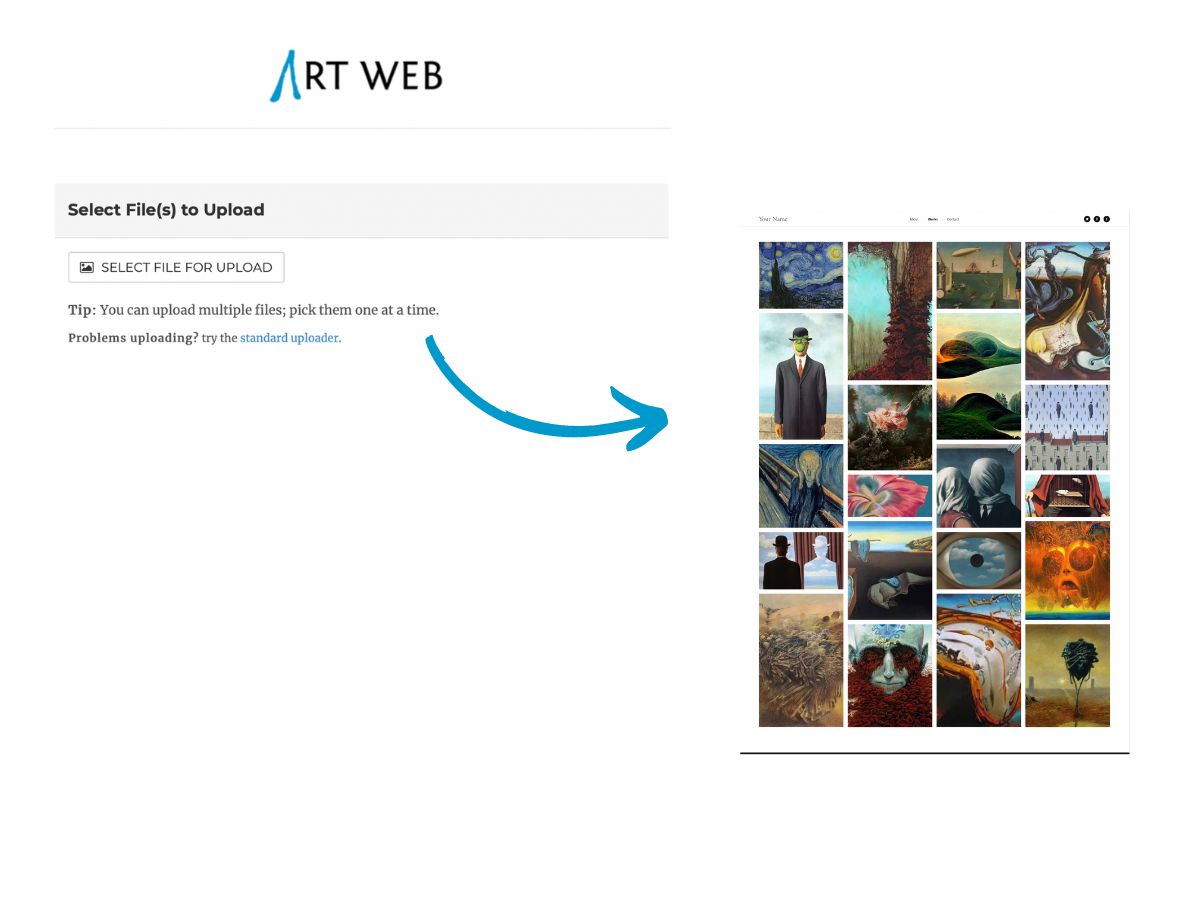
At last, the easy part! With Artweb, you simply upload your photos and your gallery templates do the rest.
Artweb member Karen Barrett combines stunning photos of her work and life with an introduction that explains the theme of each gallery page.
#6: Gallery Pages that Organize Your Art
Presentation is everything. While high-quality images of your art are a must, you also need to showcase your work as if you were building an exhibit.
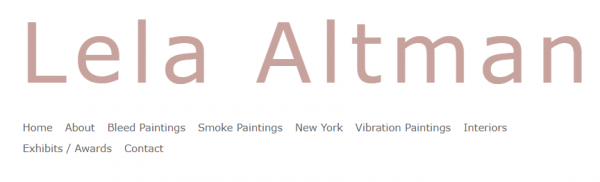
Artweb member Lela Altman uses her homepage navigation to guide visitors to gallery pages, each organized by genre or collection.
Create separate pages for each genre or medium. Or, build a page for past exhibits. If you’re hoping to secure commissions, grouping your catalog into distinct pages of no more than a dozen artworks will make it easy for visitors to find art that interests them.
Artweb makes it easy to create a gallery that displays the breadth of your art in just a few clicks.
#7: A Compelling About the Artist Page
Art fans aren’t just buying your work. They’re interested in your story, your process and your inspiration. Treat your About the Artist page as an afterthought and you risk losing views or sales.
Fortunately, you don’t have to be a great writer to craft a winning biography or artist statement.
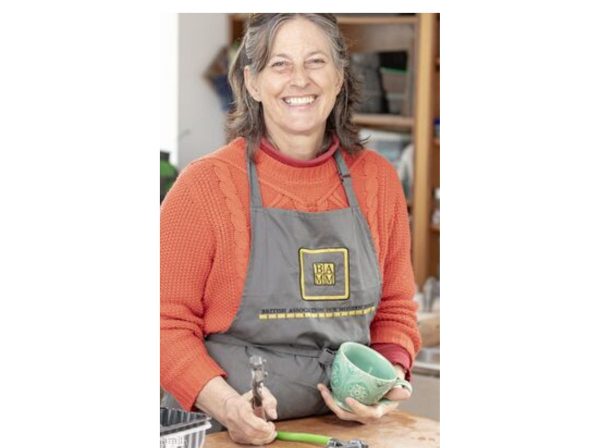
Katy Galbraith enhances the About Me page on her Artweb site with a welcoming photo of her at work.
Check out our comprehensive guide to writing an artist statement and our tips for a standout About the Artist page. Learn how to:
Describe your art with language that makes a great first impression.
Welcome them inside your studio with a candid photo that charms your buyers.
Showcase your achievements with a bio and resume that sells you AND your work.
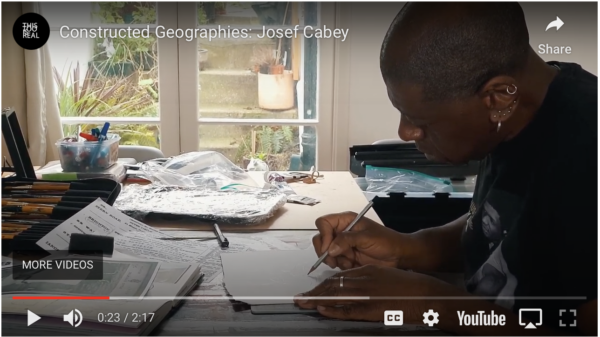
Josef Cabey uses a video on his About the Artist page to make a powerful statement about the connection between his art and personal identity.
Still need inspiration? Grab some tricks from these successful Artweb members.
#8: An Online Store to Sell Your Art
Wouldn’t it be nice if every day was a peak art sales day? But your time is scarce. You’re limited by geography. There are only so many exhibits, fairs and art nights you can realistically join.
But an online store is the secret e-commerce weapon that gives you an edge over other artists.
Many website builders offer some form of online payment system. But the best artist websites sell more art precisely because they use a solution built specifically for artists. For example, Artweb offers an easy-to-use online store that serves the needs of both art buyers and sellers:
Zero Commission
Cut out the middleman and spare yourself hefty gallery fees.
Easy, trustworthy payment
Secure credit card and PayPal options give you and your customers peace of mind.
Sell to a global market
Price your art in multiple currencies, offer shipping options and give them secure delivery wherever they call home.
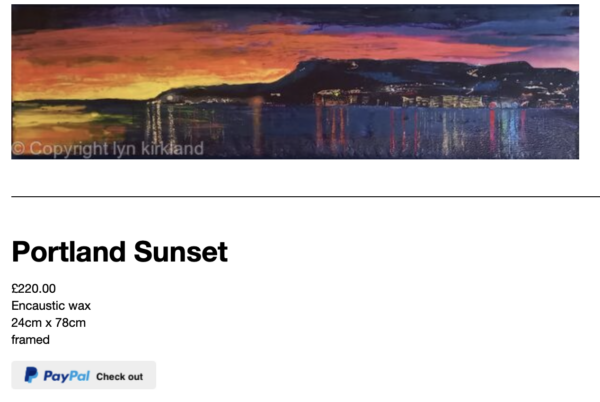
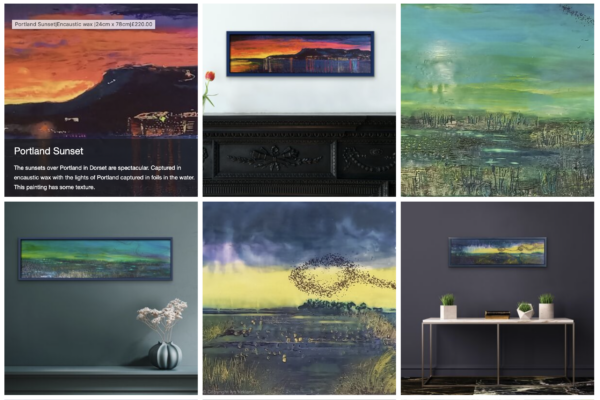
Encaustic artist Lyn Kirkland uses her Artweb site to feature an art shopping gallery and an e-commerce page where visitors can buy art directly.
#9: SEO that Gets Your Art Found on Search Engines
Every month, 500,000 people search for art online.
So how can you grab a share of that traffic? Better yet, how can you do it without spending a fortune on ads?
The answer is search engine optimization. Or, put simply, how to get found on Google or other search engines.
Marketing pros will promise to rocket you straight to the top of search results with a brew of web hacks that will cost you thousands of dollars per month. And maybe, a year from now you’ll see the first hints of progress.
The truth is that a fancy traffic-boosting campaign might work. But it requires an unbelievable investment of time, money and expertise. And at the end of the journey? There’s still no guarantee of being found.
Artweb’s website builder makes it easy to format each page so search engines can read it.
Instead, the smartest artists spend time on their art, and leave the technical details of search engines to their website builder.
That’s why we designed our website platform with built-in search engine optimization functions. The goal is a website experience that is easy, fast and affordable but still gets you the viewership you deserve.
Make sure your website builder offers you the worry-free formatting to ensure each page of your website is visible to search engines:
Fast Loading
Visitors abandon a slow-loading site, and search engines favor sites that load quickly. Artweb makes sure your website loads quickly, no matter how many photos you post.
Optimized Viewing
Your website automatically displays the best layout, whether on desktop, laptop or phone. No need to worry about formatting it for multiple devices.
Less Technical Worry
As you design pages, Artweb automatically converts your content into the language of search engines.
The result? Your artist site gets displayed in web searches to the right audience at the right time.
Looking for more tips? Read our guide for easy search engine optimization. Or, check out more tips for driving traffic to your website.
#10: A Contact the Artist Page
Did you know that 90 percent of visitors to your website will leave, never to return? That’s a lot of missed opportunities to sell your art. Enter the artist contact page.
An often neglected backwater, the best artist websites transform this humble workhorse into an essential part of their online marketing machine.
You can build a contact page in less than a minute with Artweb’s templates.
Checklist for your Artist Contact Page
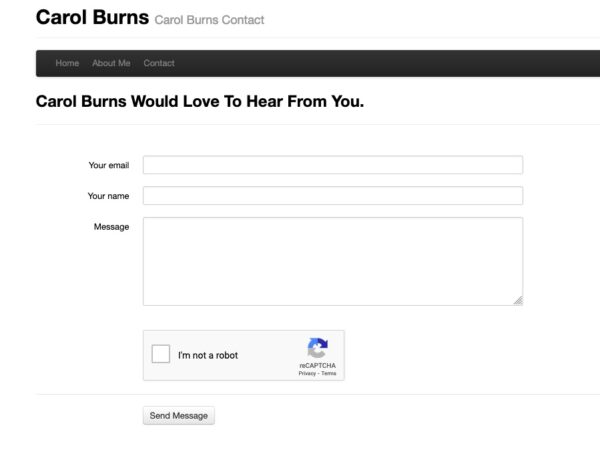
A Contact Form
Include fields for name, email and a message box. Set up messages to be delivered to your email for speedy response.
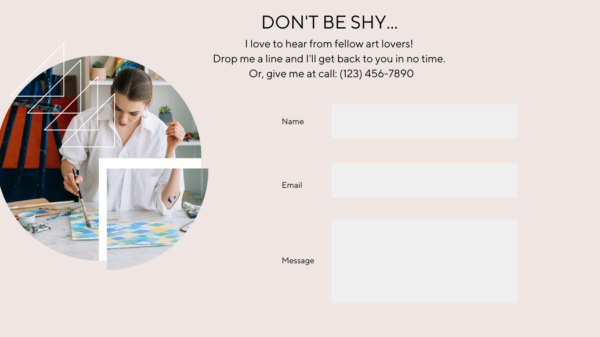
An Image with Personality
Add an image that tells the story of you, your art or the action you want the visitor to take.
Multiple Ways to Get in Touch
Make it easy for visitors to contact you using their preferred medium. Include social media feeds and a subscribe button for your newsletter. If you have a store, exhibit at a gallery or sell at a regular art fair, include the address and hours of operation.
Or transform a simple contact page into a beautiful expression of your art and personality.
Creating a Beautiful Artist Website Doesn’t Have to Be Hard
If you follow these simple steps, you can DIY your way to a portfolio website that captures your artistic vision and helps you sell your art.
And, if you’re wondering how to build your very own artist’s website without the stress or expense, consider building a free website with Artweb.
]]>Featured Artist Catherine Kirkland | Artsy Shark
https://archelleart.com/featured-artist-catherine-kirkland-artsy-shark.html
Tue, 21 Mar 2023 19:34:10 +0000https://archelleart.com/featured-artist-catherine-kirkland-artsy-shark.html
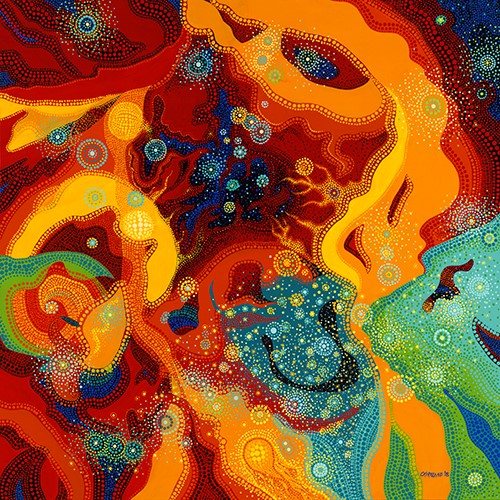
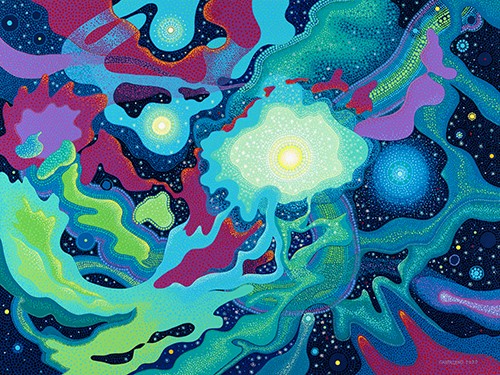
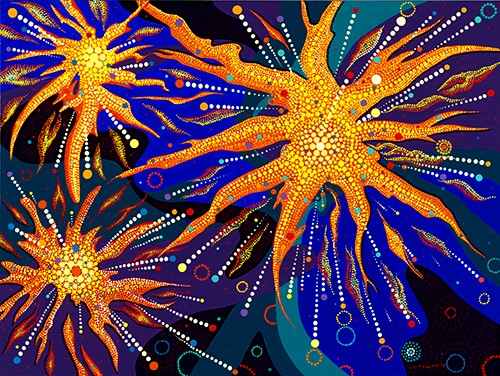
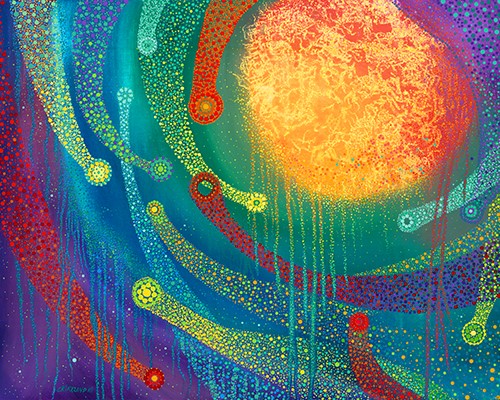
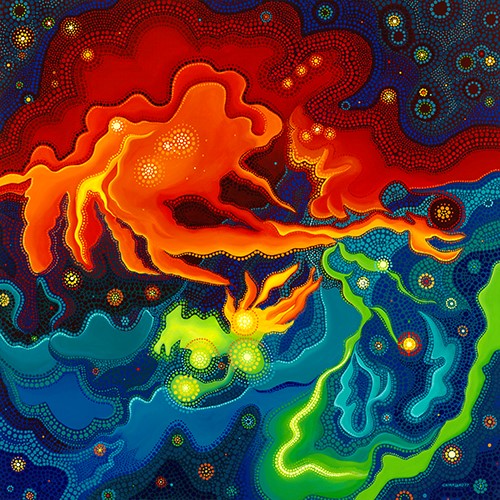
Artist Catherine Kirkland presents a otherworldly collection of colorful paintings in her distinctive pointillist style. See more by visiting her website.
“Space #4″ acrylic on canvas, 48″ x 48”
Following a fine arts education and a long career as an award-winning art director, illustrator, graphic designer and production artist, I went back to college to study Interior Design. Ironically, a color theory assignment inspired me to pick up a brush again. Soon, I was painting small landscapes in acrylic on canvas, while rediscovering the joy of working with brushes and paint.
“Space Frontier” acrylic on canvas, 36″ x 48″
As my skill grew, I began to survey the art community in the metro. By visiting galleries and exhibits, I educated myself on local art offerings, realizing quickly that I needed to up my game. There were so many outstanding landscape artists; it was obvious that I needed to pursue a different subject matter. I had to find my unique visual voice.
“Interstitium” acrylic on canvas, 36″ x 48″
It was on a trip to the Kirkland Museum of Fine & Decorative Art in Denver, that I had my “aha” moment. The museum features the artwork of the late Denver-based artist, Vance Kirkland (no relation). His amazing abstract paintings and techniques influenced me to divert from my representational painting style.
“Comets II” acrylic on canvas, 24″ x 30″
Like Vance Kirkland, the concept of space fascinates me. Space, both outer and inner, lends itself beautifully to abstraction. There is a synergy in rendering stars through pointillism. It was at this intersection of space and dots that I found my voice as an artist, and gained both customers and fans. My decision was affirmed after posting a new painting on social media. A follower remarked, “I knew this was your painting before I even saw who posted it!”
“Odyssey” acrylic on canvas, 48″ x 48″
Pointillism is labor intensive, requiring not only patience but keen fine motor skills. During my career as a production artist in pre-computer days, I created “mechanical” art. Using technical pens, T-squares, triangles, X-acto knives and Rubylith®, I developed my fine motor skills creating “mechanicals”. The precision required in production art prepared me well for pointillism. I also find that applying dots of color on a painting is comparable to other forms of precise, repetitive handcraft such as needlepoint and cross-stitch.
“Out of This World” acrylic on canvas, 36″ x 48″
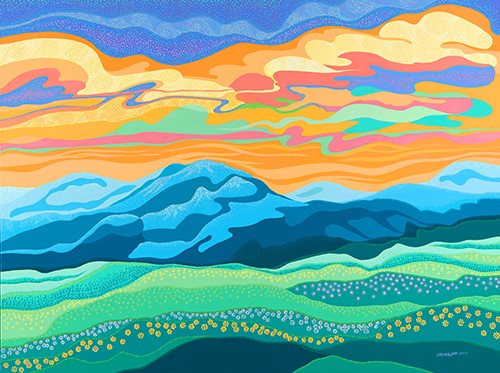
When I began my space series, I focused on outer space themes such as nebulae. In more recent paintings, I have explored inner spaces, i.e., microscopic inter-cellular spaces of the human body. Expanding the space concept further, my latest work in the series depicts an open space…a vast, abstract mountain landscape.
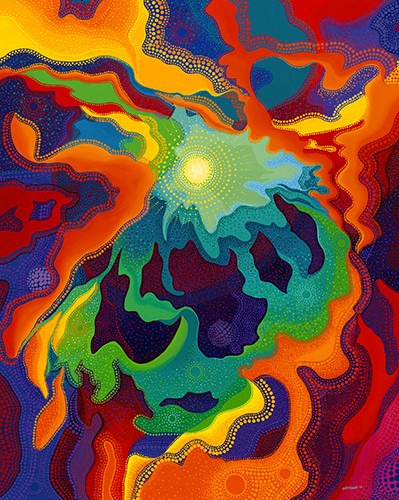
“The Force” acrylic on canvas, 60′ x 48″
My paintings begin with a loose design sketch on the prepared canvas. Next, using brushes, I paint large areas of color. Layered upon this under-painting are individual dots of paint, applied with unconventional tools such as dowels, skewers, chopsticks, forks and spoons. Tens of thousands of applied dots create the details of movement, depth and form.
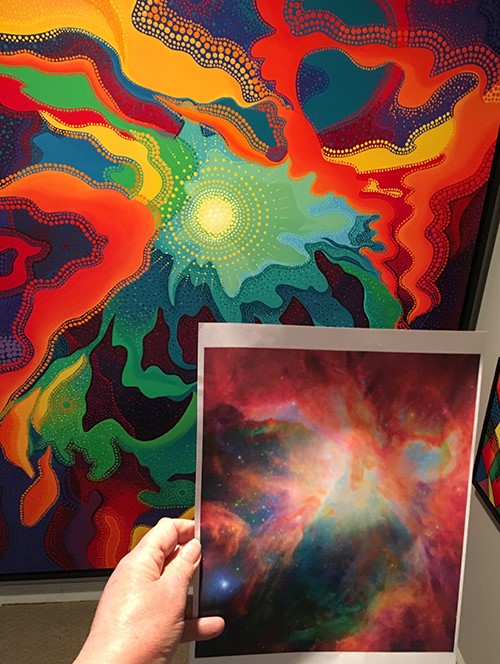
“The Force” inspiration and painting
It is through vibrant color and intricate dotted patterns that I strive to bring a sense of wonder to viewers of my pointillist abstracts. My greatest delight is watching exhibit guests take in a painting from afar, then draw closer and react with amazement at the thousands of dots that embellish it.
Catherine Kirkland invites you to follow her on Facebook and Instagram.
Want to stay current on cutting edge business articles from Artsy Shark, plus artist features, and an invitation to the next Call for Artists? Click below to sign up for our twice-monthly email. You’ll get all this plus opportunities and special offers that you can’t get anywhere else!