

By Sooa McCormick, CMA Curator of Korean Art

This yr, in honor of Asian American and Pacific Islander (AAPI) Heritage Thirty day period, the museum acknowledges the array of variety in just the myriad AAPI identities and cultures. The not too long ago opened Korean art rotation Making Urgency: Present day and Up to date Korean Art presents artworks surrounding a piece of Korean heritage, the diaspora, an encounter shared by numerous other folks in the AAPI communities.
Induced by a series of purely natural disasters, the enormous Korean migration to Chinese and Russian border regions from the 1860s to 1910 is mentioned as the very first technology of present day-period of time Korean diasporas. One more significant team in the Korean diaspora is the zainichi, the long lasting, ethnic Korean citizens in Japan. Min Jin Lee’s 2017 bestseller Pachinko embedded the issue of systematic discrimination from zainichi as a major structural part of the story.
The zainichi diasporic expertise also touched my mother and her household. My mother was born in Osaka, Japan, as the ninth of ten children. My grandmother owned a thriving company of dry seafood goods, though my grandfather, a distant member of the royal spouse and children, appreciated his existence as a common gentleman amongst Japanese courtesans. The entire spouse and children returned to their liberated homeland correct before the outbreak of the Korean War (1950−53). However in the divided homeland, my mom seven decades old at the time — witnessed her favored elder brother, a new graduate from the Office of Physics at Tokyo University, killed by the hands of North Korean troopers.
In relation to art, the term “diaspora” is utilised to talk about artists who have still left their homeland and who express their transnational activities in the do the job they make. Building Urgency: Fashionable and Contemporary Korean Art, a thematic rotation not too long ago mounted in the CMA’s Korea Basis Gallery, explores how Korean artists reworked diasporic experiences into a impressive supply of creativeness.
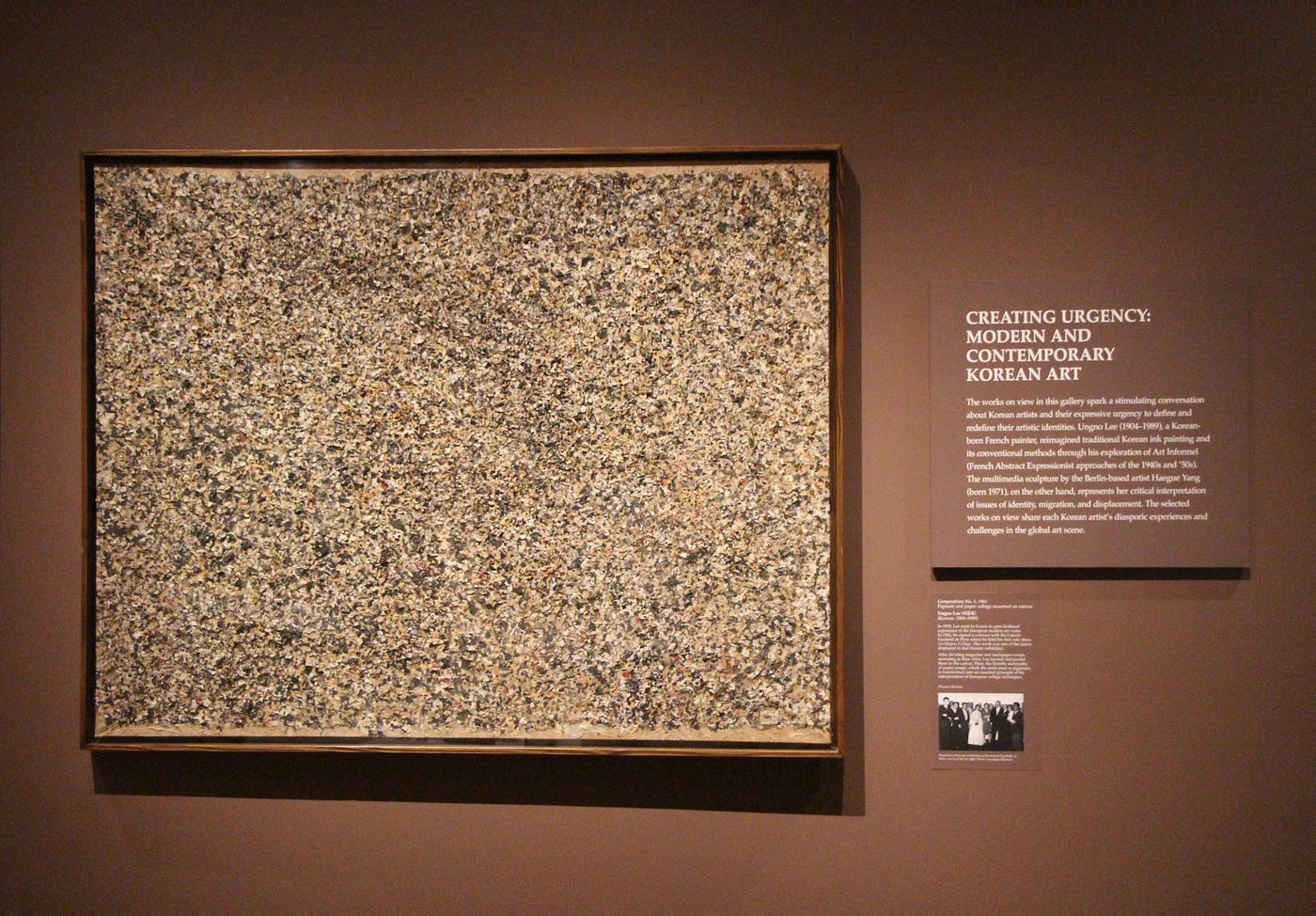
Experimentation with his possess diasporic working experience was at the forefront of Ungno Lee’s (이응로) (1904–1989) practice in his later career. In 1958, Lee went to France to attain firsthand comprehending of the European present day artwork scene. In 1962, he signed a agreement with Galerie Paul Facchetti in Paris, in which Jackson Pollock’s function experienced been presented for the very first time in Europe. Composition No. 1, now in the CMA’s collection, was 1 of the parts shown in Lee’s first solo exhibition at the gallery.
After dividing journal and newspaper scraps in accordance to their color, Lee layered and pasted them on to the canvas, resulting the thick, extremely textured surface area.
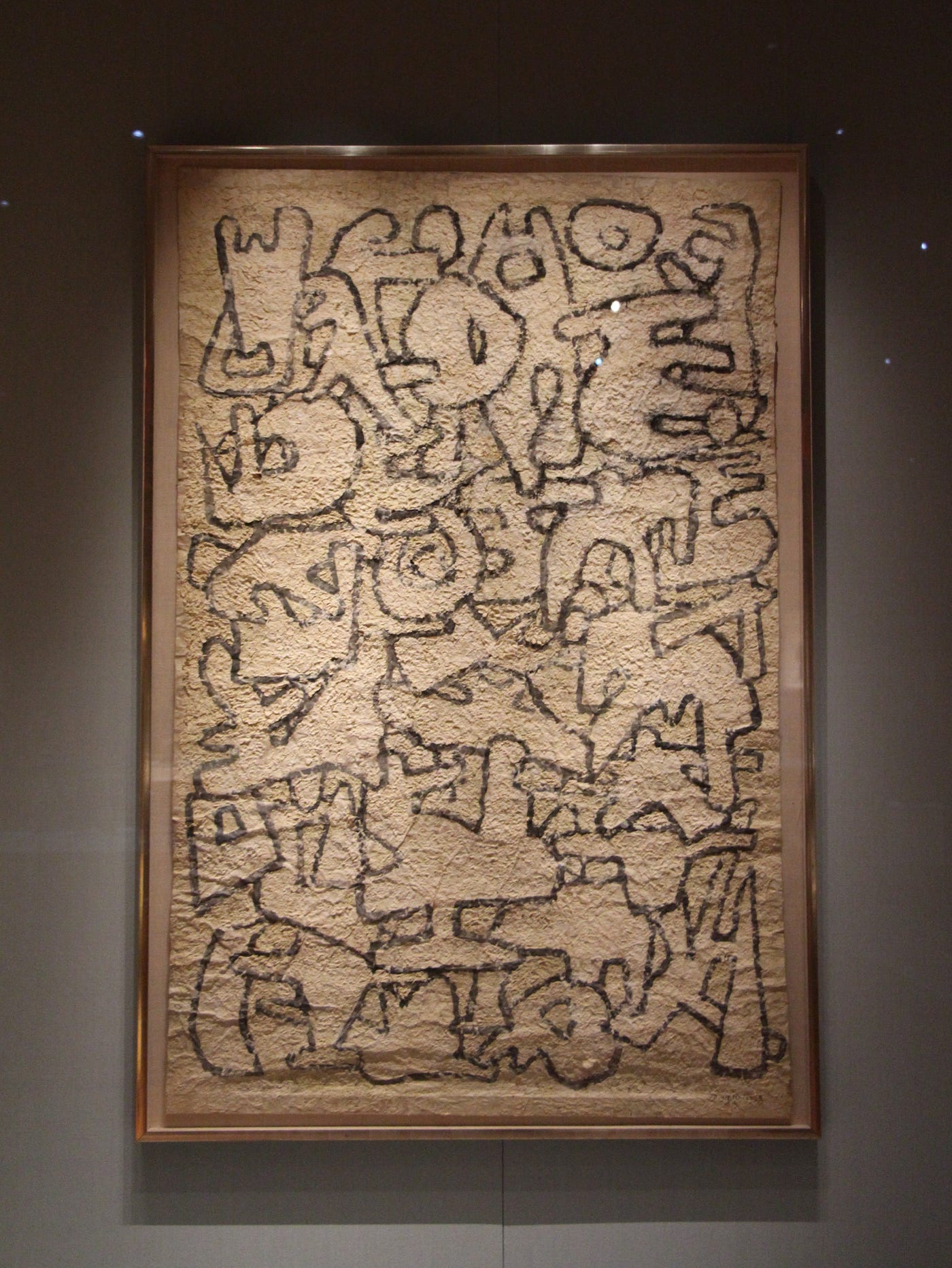
In 1967, Lee was accused of spying for North Korea and imprisoned for two and a half years in South Korea. Just after returning to France in 1969, Lee started off to integrate calligraphy into his abstract collage operates.
In this do the job, Lee drew significant pseudo letters in black pigment over a quickly brushed layer of white. Then he laid cotton wool flat and pasted it on fibrous Korean mulberry paper. His abstracted letters are not intended to be study but fairly amplify Lee’s unspeakable expertise as an particular person caught up in Korea’s Chilly War politics and as an exiled artist.
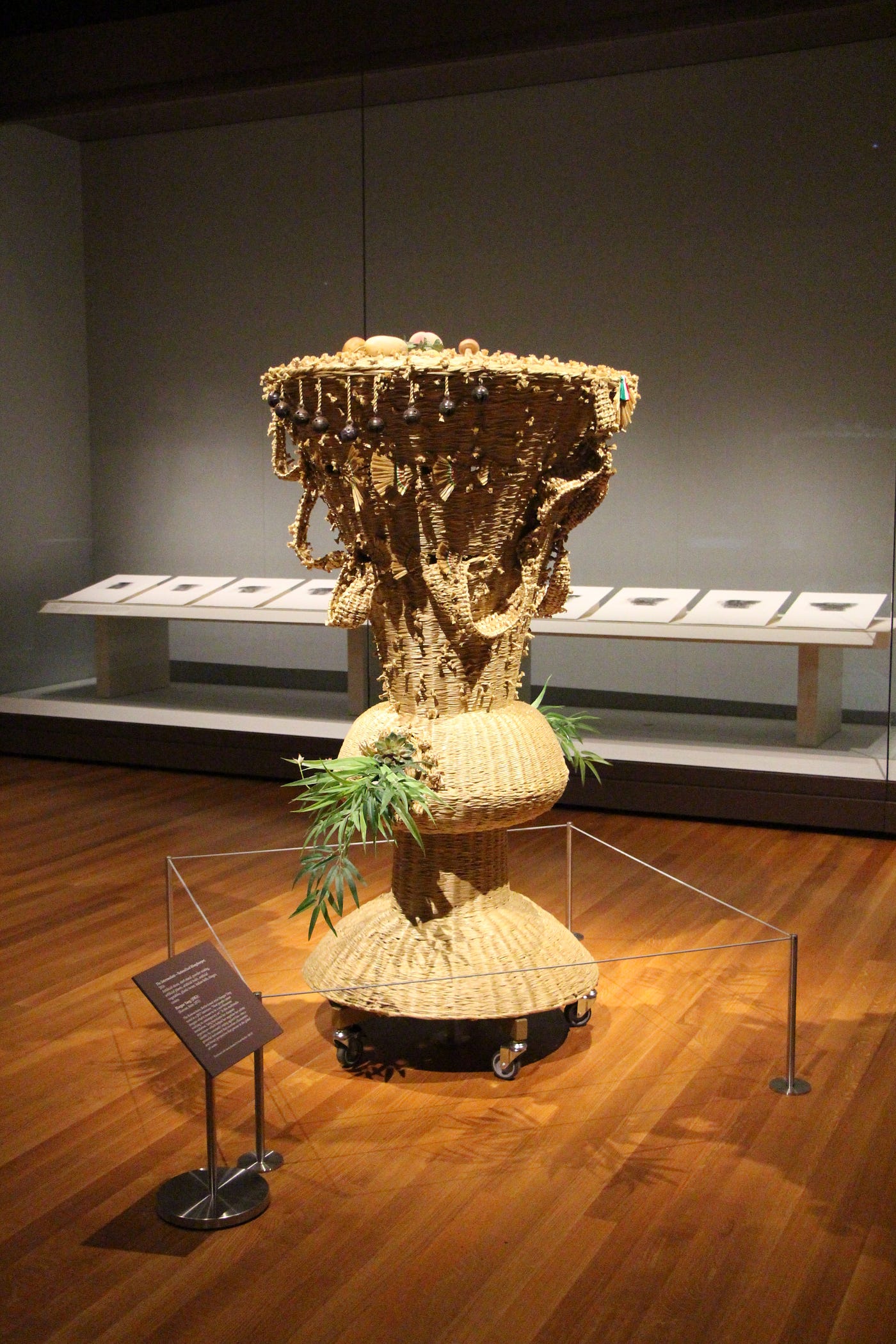
The Intermediate — Naturalized Klangkoerper is made up of mass-manufactured cheap components, forming an anthropomorphic form. Conjuring a readymade kitsch icon in the context of European modernist artwork, this multimedia installation also evokes a Korean shamanistic ritual, specifically its sensorial components. Bronze bells hung all-around the fringe of the top rated element perceptually could be reminiscent of Korean shamanistic ritual bells, a gadget to converse with the religious earth.
The Korean-born, Berlin-centered artist of the work, Haegue Yang (양혜규)(b. 1971), transformed her diasporic encounter, like a strong shaman, into a formidable instrument that exorcises a Eurocentric and binary perspective that persists in the global art scene.
Ceramic artist Ik-yung Kim (김익영) (b. 1935) pursued her graduate review in ceramic artwork at Alfred College in New York. There, she experienced a probability to go to a lecture by British ceramicist Bernard Leach (1887–1979). Leach’s lecture, which hugely praised Joseon-interval white ware and its naturalistic minimalism, was an creative epiphany for Kim, serving to her rediscover that artistic custom as her supply of inspiration.
The chosen artists in Generating Urgency: Present day and Present-day Korean Artwork have utilised their diasporic ordeals as a effective instrument for both adopting and challenging the concepts and structures of the established art environment. Celebrate AAPI Heritage Thirty day period by viewing these artworks and far more in the Korean, Chinese, Japanese, Indian and Southeast Asian, and contemporary artwork galleries. Also, use the “Asian American artists” filter in Selection On-line.